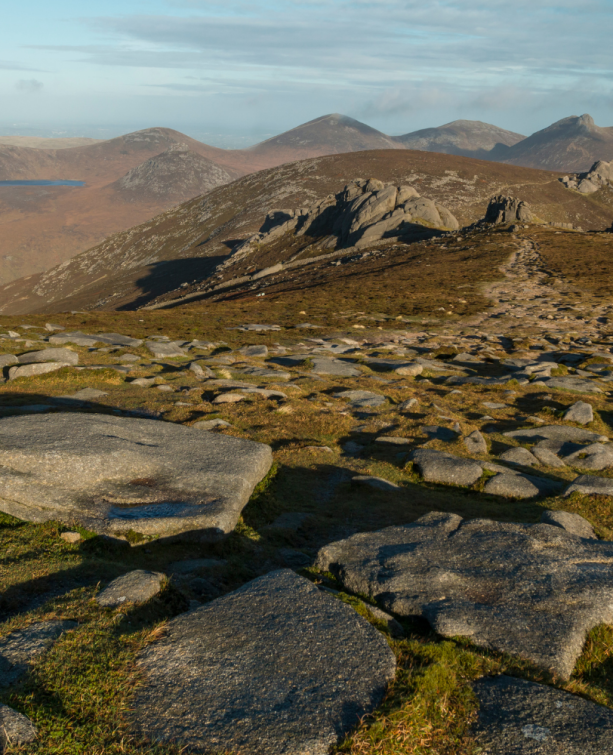
Climbing Slieve Binnian from Carrick Little (for novice hikers)


Would you like to sponsor this article?

Let’s get one thing straight before you book your parking spot.
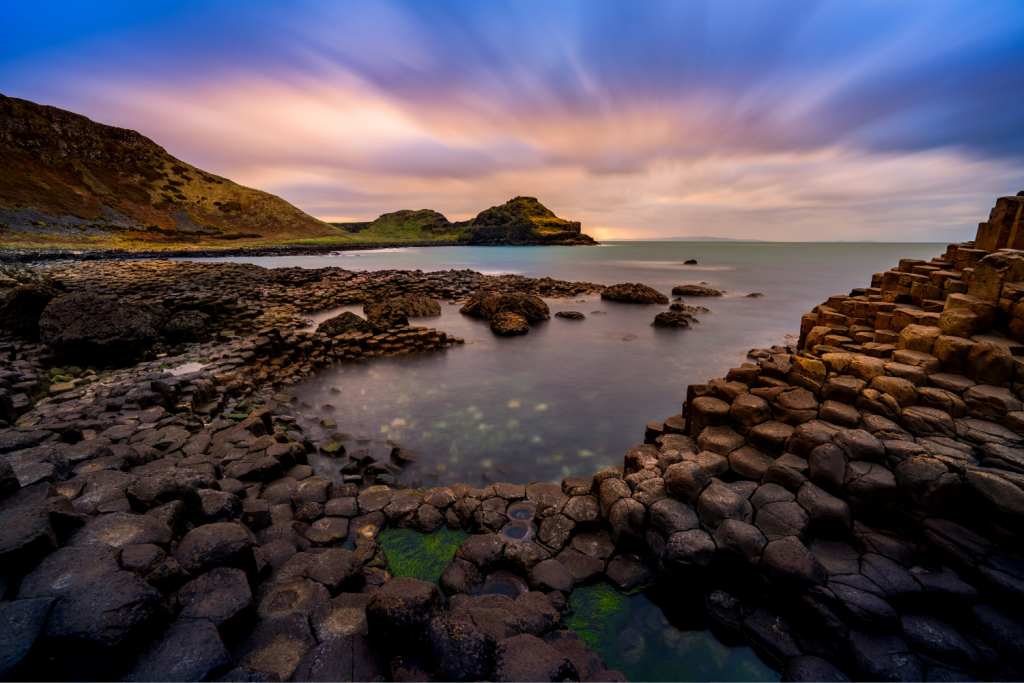
The Giant’s Causeway is absolutely worth it. Genuinely one of the most extraordinary places on the island of Ireland. Sixty million years old, built by volcanic activity (or a giant called Finn McCool, depending on who you ask), and somehow more impressive in real life than in every photo you’ve ever seen of it.
But summer can also make it a bit of a nightmare if you’re not prepared.
Here’s what you actually need to know.
I mean 8am early. Before the tour buses. Before the school groups. Before every family from the entire island decides today’s the day.
The Causeway can hit peak capacity before 10am in July and August. That’s not an exaggeration. You’ll be sharing those famous hexagonal basalt columns with several hundred of your closest strangers if you roll up at noon, and any photo you take will have at least four strangers’ heads in it. Fair enough if that’s your vibe, but most people aren’t really going for that.
Get there first thing and you’ll practically have it to yourself. The light is better anyway.
This is the bit people skip and then regret.
The on-site car park at the visitor centre is reserved for Visitor Experience ticket holders and National Trust members. You can’t just rock up and squeeze in. Pre-booking online is strongly recommended, and in summer, that’s less of a suggestion and more of a survival strategy.
The Visitor Experience itself costs £16 for adults and £8 for kids (5–17), with a family ticket at £40 for two adults and up to three children. National Trust members get in free but still need to pre-book. If you’re visiting more than once or two in a season, membership pays for itself pretty fast. (I know, that sounds like something a National Trust leaflet would say. It’s still true).
If you’re coming without a Visitor Experience ticket and just want to walk the coastal paths, there’s a separate Causeway Coast Way car park at Innisfree Farm on the Causeway Road – £12 via the JustPark app. Worth knowing about.
If you’re coming by bus, the Causeway Rambler (Service 402) runs from Coleraine and Ballycastle and is honestly a decent option, especially in summer when the roads get congested.
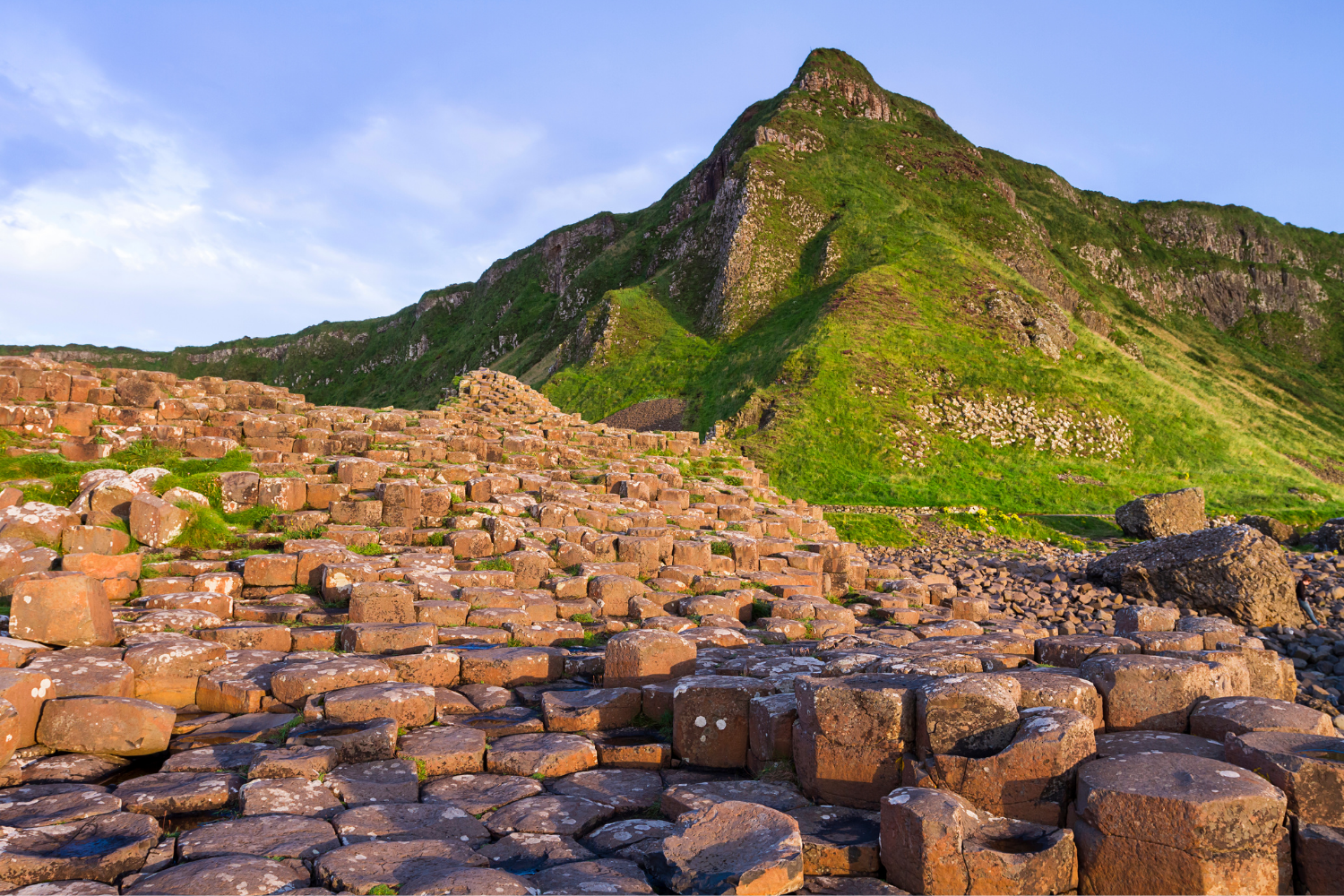
Those hexagonal rocks look flat in pictures. They are not flat. They’re uneven, they can be slippery when wet (which in Northern Ireland is… often), and you will absolutely roll an ankle in sandals if you’re not paying attention.
Trainers minimum. Walking boots ideal. Flip flops: please, no (I’ve seen it. It’s not pretty).
This is Northern Ireland in summer. You might get 22°C and glorious sunshine. You might get sideways rain and 13°C with a wind that feels personally hostile.
The answer is layers. Always layers. A waterproof jacket stuffed in your bag costs you nothing but a little dignity if the sun stays out all day.
Most people walk down to the Causeway itself on the Blue Trail – about 0.8 miles from the visitor centre – take a hundred photos, and leave. Which is fine! It’s incredible.
But if you’ve got a couple of hours, walk the clifftop too.
The Red Trail takes you up onto the headland and the views from the top are something else entirely. You can see Scotland on a clear day. The whole coastline stretches out. It genuinely earns the effort.
The full coastal path toward Dunseverick Castle is one of the best walks in the north. Pack a sandwich. Earn it.
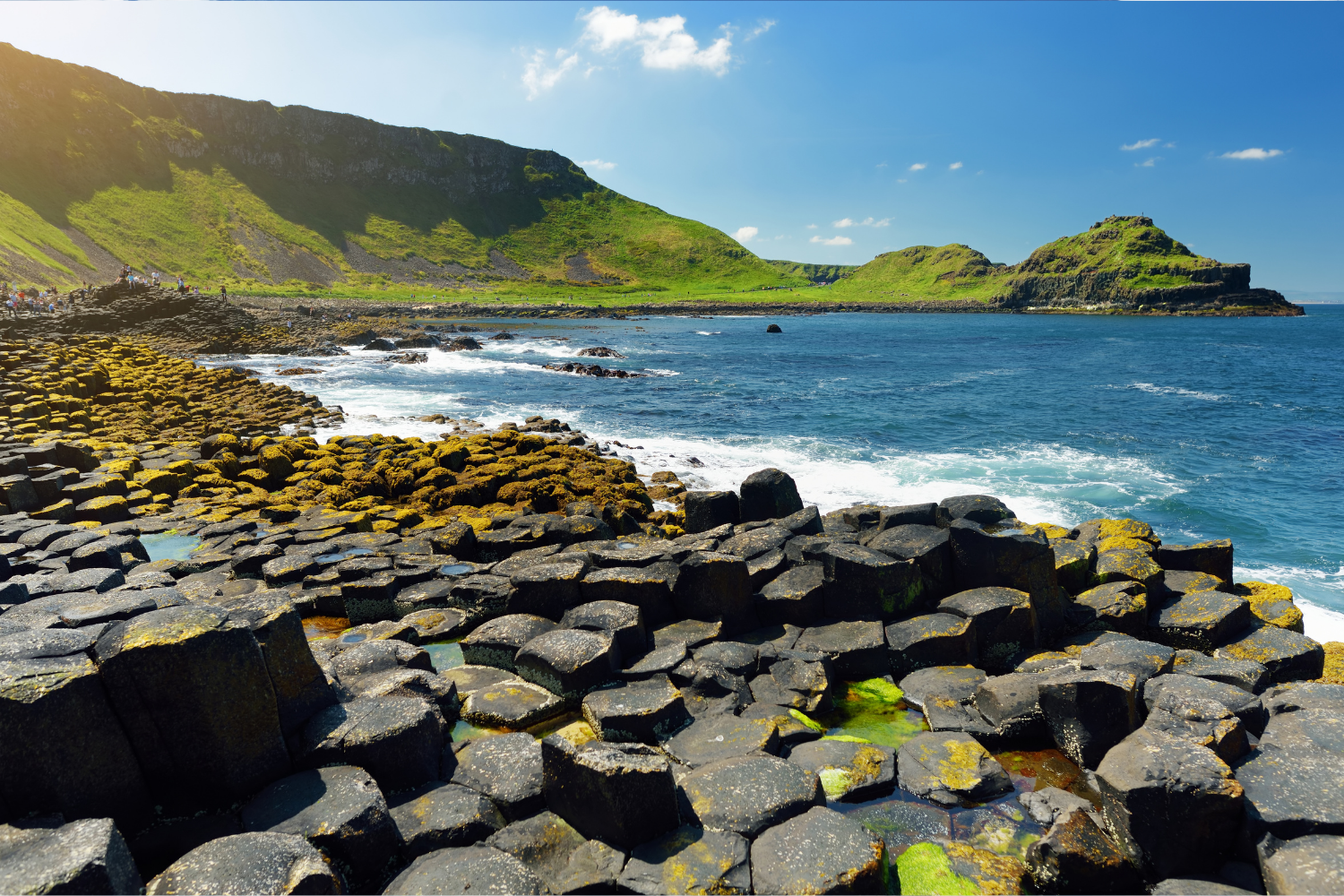
It’s underground and eco-designed, which means it blends into the landscape (clever) but also means you can walk past it without realising. The exhibition inside is actually worth 20 minutes of your time, especially if you want to understand what you’re looking at geologically. Also: the café. Grab a coffee, grab something warm.
You’ll thank yourself.
Autumn (September to November) is genuinely my favourite time to visit. Crowds thinned out, air is crisp, light is golden, and the craic is still good. The sea gets dramatic as the Atlantic swells build up. Bring the waterproof. Worth every minute.
Winter is for the bold. The Causeway in January with a storm rolling in is like watching the world end in the best possible way. You’ll have it almost entirely to yourself. You will also be very, very cold. Full waterproofs, hat, gloves. Not optional.
Spring (March to May) sits in the sweet spot. The tourist season hasn’t quite kicked in, prices are lower, the wildflowers start appearing along the cliff path, and you’ve got a realistic chance of decent weather without the summer chaos. This is the underrated option and not enough people take it.
Off-season also means pre-booking is far less critical. You can often just arrive, pay on the day, and walk straight in. Like it’s 2009 and too few people knew what it was yet.
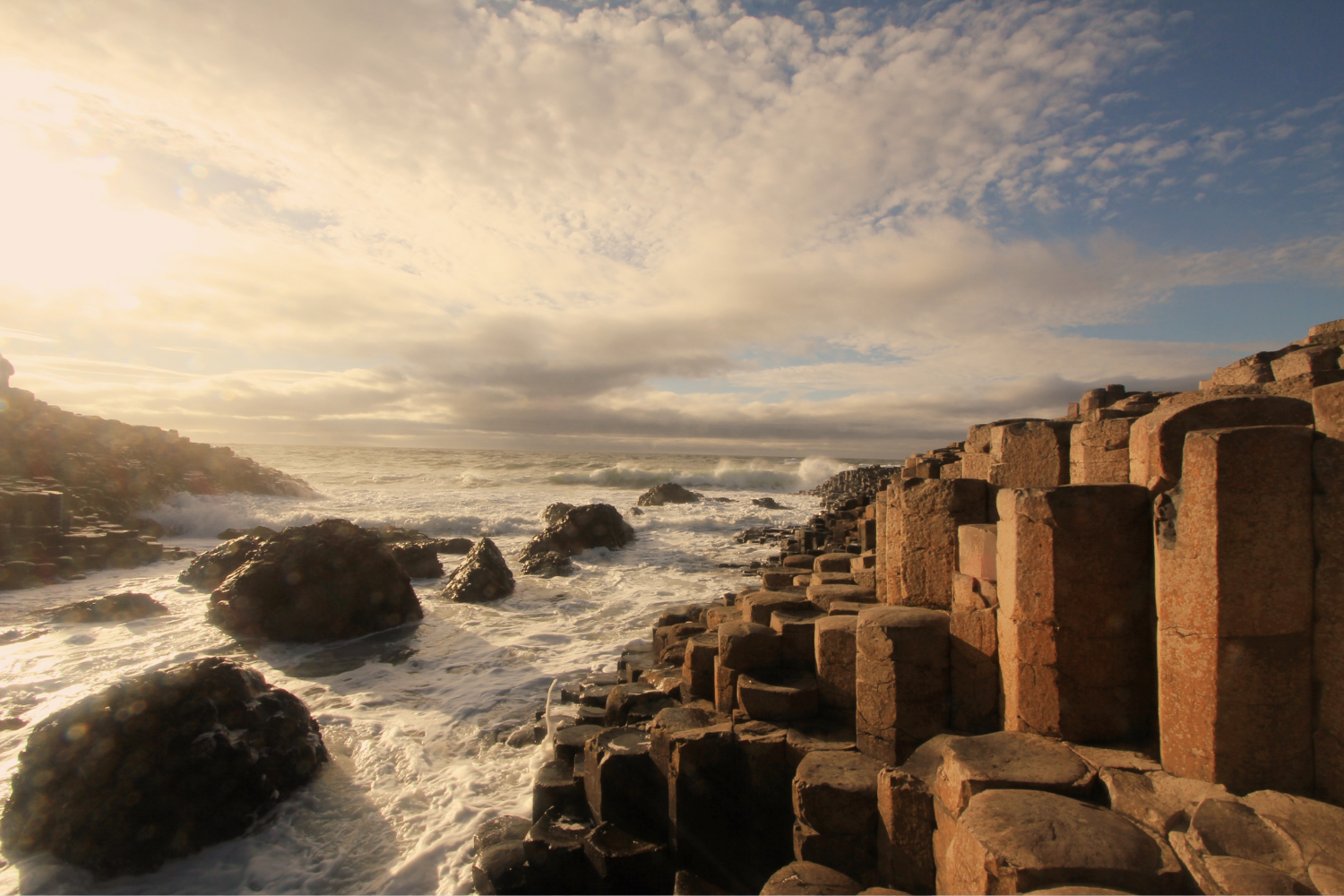
Whenever you come, get there early, dress sensibly, and walk further than the famous rocks.
The rest will take care of itself.
Find the perfect place to stay or eat near The Giant’s Causeway on our Explore page.
Hi, I’m David: creator of Trek NI, husband, Christian, dog-owner, Liverpool fan, watcher of movies, drinker of caffeine. Not in that order.
 Belfast,Photography
5 scenic walks around Lisburn
 Mourne Mountains
Bearnagh: Chased the sunset, caught the rain
 Mourne Mountains
Camping in the High Mournes
 Fermanagh and Tyrone
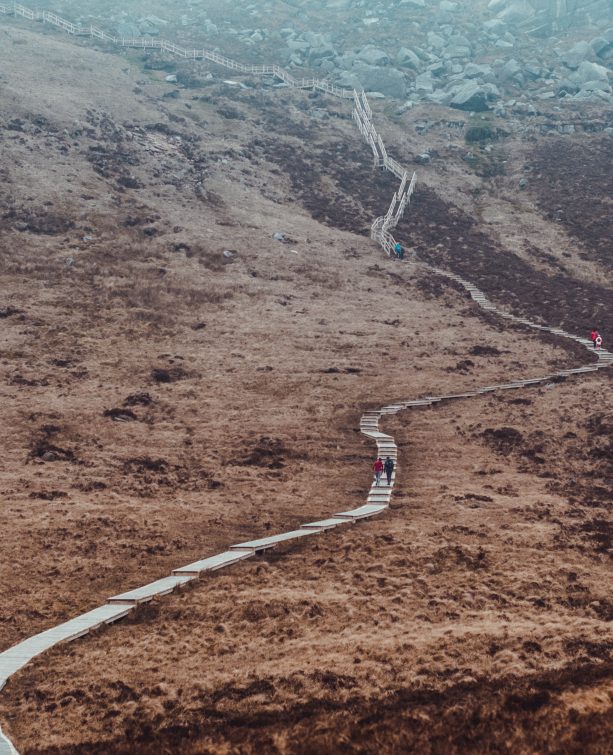
Cuilcagh: Stairway to Heaven
 Features
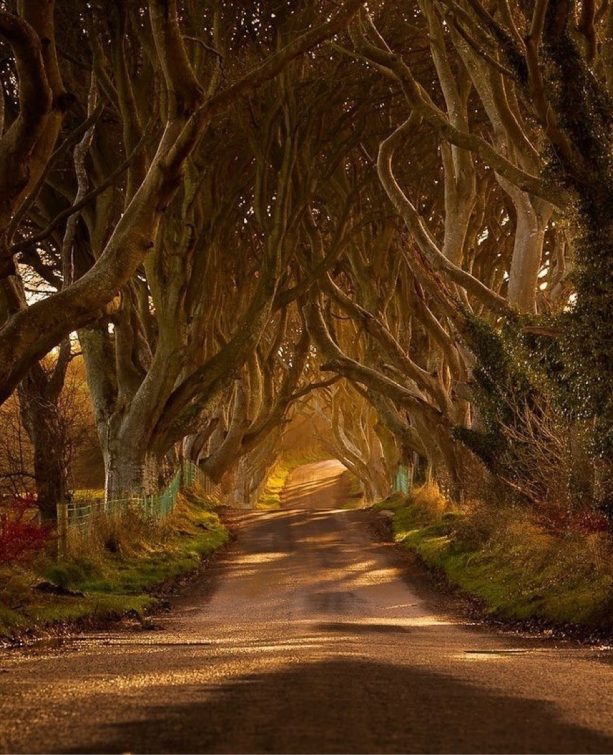
Every Game of Thrones Location in Northern Ireland
 Mourne Mountains
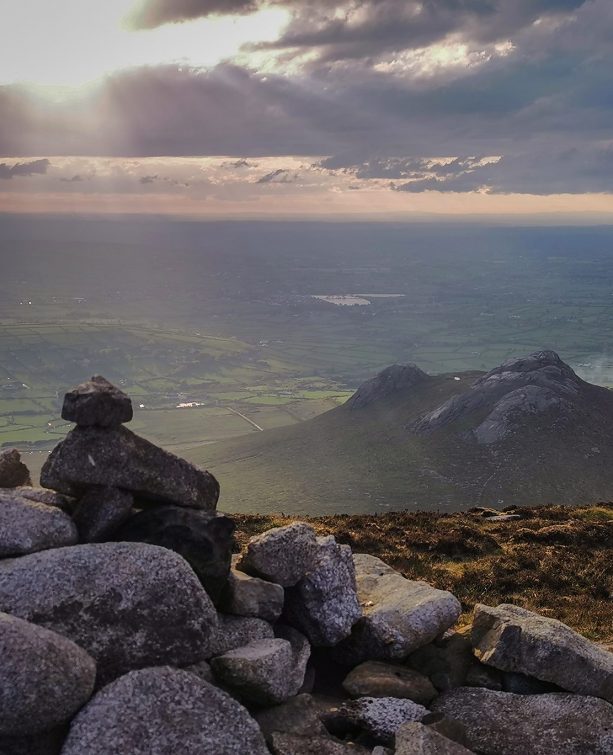
Hen and Cock Mountains
 Mourne Mountains
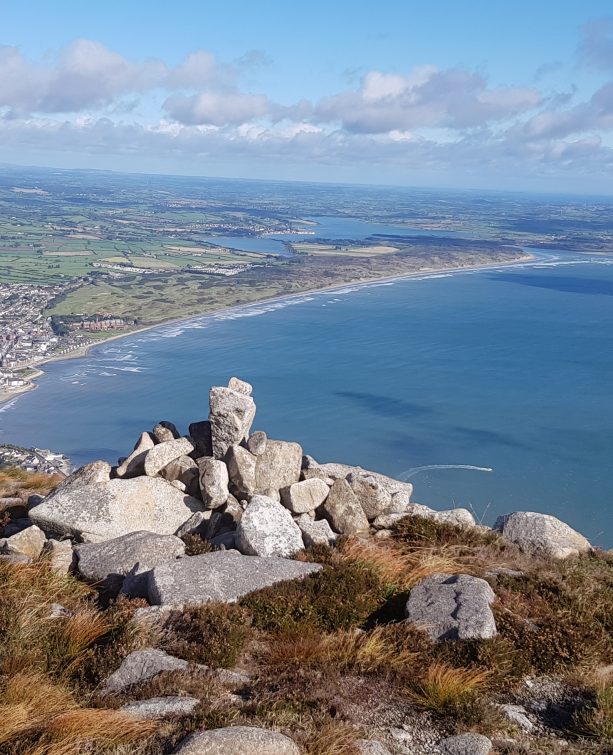
Leganabrachan, Millstone and Thomas: Donard’s Seaside Bodyguards
 Mourne Mountains
Percy Bysshe and Cove Caves